
Concept by - Sagnik Mitra ( IIT Indore )
Review and Blog development - RE4U Solutions
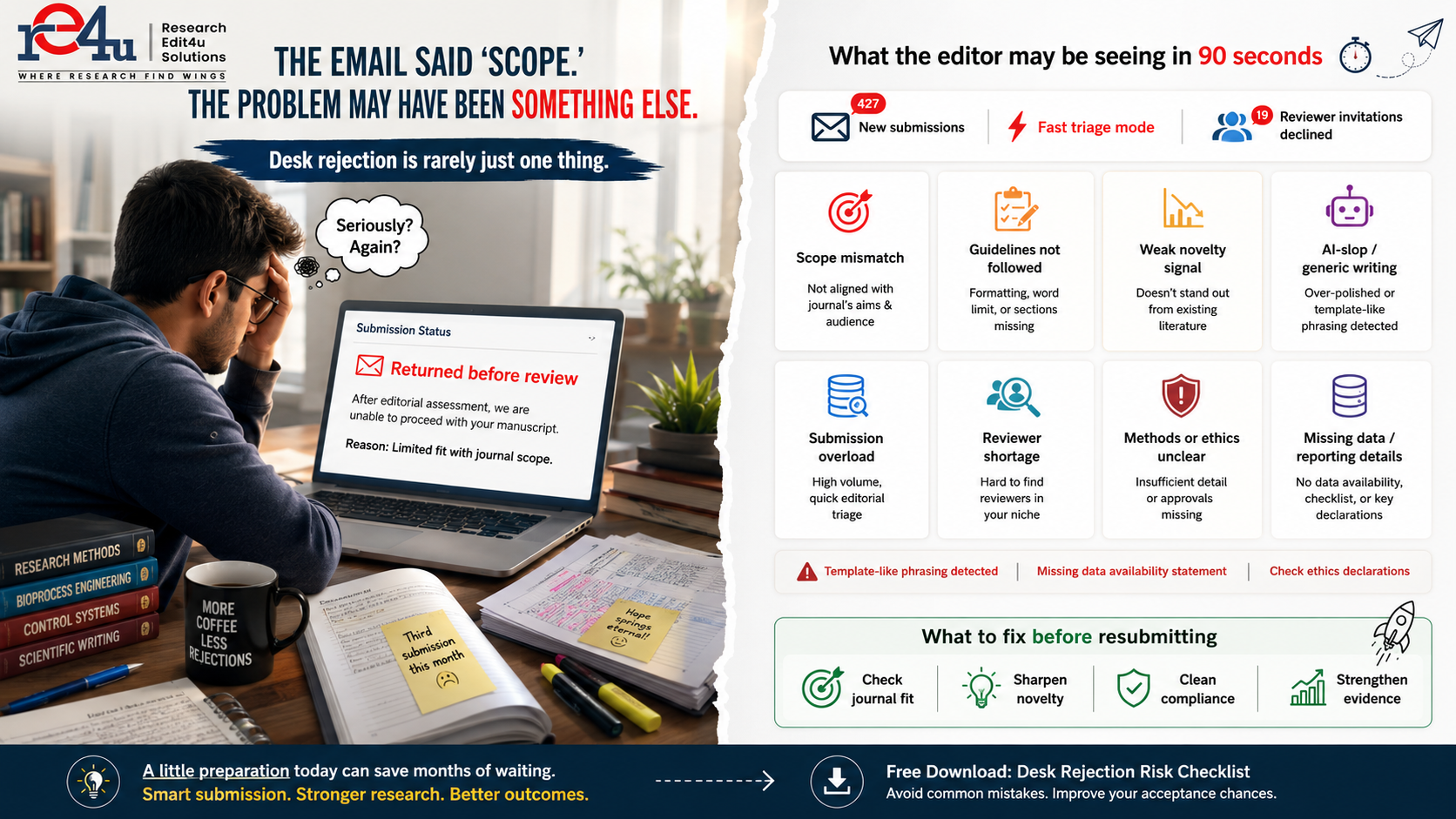
You submit your paper. You refresh your inbox like it is a live cricket score. Then, within a few days, the journal replies: “We are unable to send your manuscript for peer review.”
Congratulations. You have met the academic publishing version of a bouncer at the club door: polite, fast, and not interested in your explanation.
Most researchers assume desk rejection means: “My paper is bad.” Twist: not always. Many papers are rejected before peer review because they look wrong for that journal, not because the research is worthless. The editor may not be judging your entire study. They may simply be deciding whether your paper deserves reviewer time.
Simple Fact: Desk rejection means the journal editor rejects a manuscript before sending it to external peer reviewers. The most common causes are poor journal fit, weak novelty, poor abstract positioning, missing submission requirements, methodological concerns, ethical or data-sharing gaps, and overclaimed conclusions. |
Before you submit again, do not guess your rejection risk. Download the free Researchedit4u Rejection-Risk Checklist or request a Pre-Submission Rejection-Risk Assessment.
Let us do the autopsy. No scary lab coat needed. Only honesty, a checklist, and perhaps a cup of tea strong enough to survive Reviewer 2.
1. You think the problem is English. The twist: the bigger problem is journal fit.
Language matters, of course. A confusing paper makes the editor’s job harder. But a polished paper sent to the wrong journal is still like wearing a sherwani to a swimming competition. Impressive? Maybe. Appropriate? Not quite.
Editors first ask: Does this manuscript belong in our journal? If your topic, method, discipline, or contribution does not match the journal’s aims and recent publications, the editor may reject it before review. This is especially common when authors select journals by impact factor first and scope second.
Fix it before submission: read the aims and scope, then check the last two issues. If your paper does not resemble the journal’s recent conversation, do not force it. Reframe the paper or choose a better-fit journal.
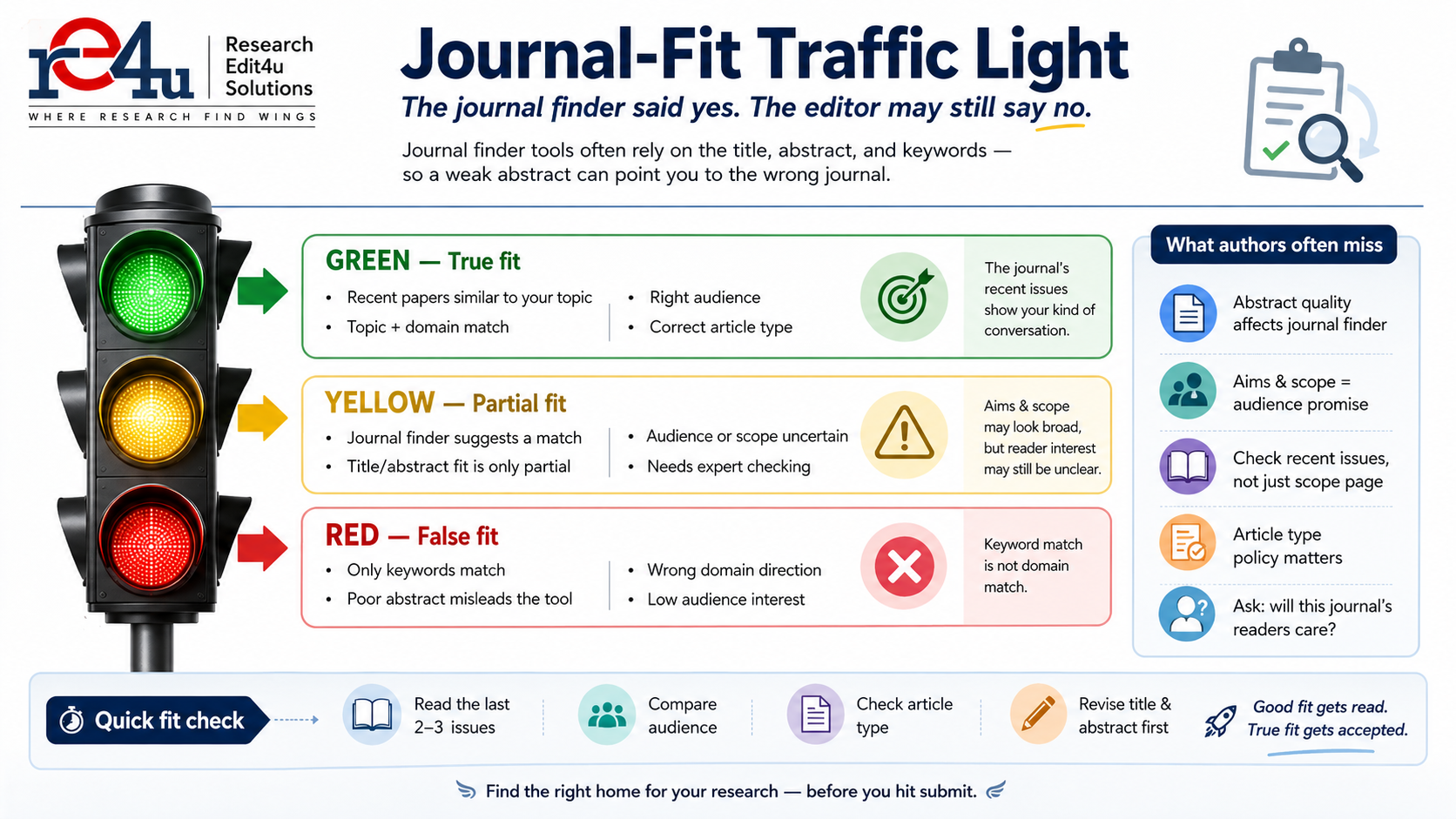
2. You think your title is fine. The twist: your abstract may be silently betraying you.
The handling editor may not start by reading every table, graph, and appendix. Often, the abstract and cover letter create the first impression. If the abstract sounds vague, overclaims the finding, hides the real novelty, doesn’t give clarity on type of article, or reads like “many studies have been done, so we also did one,” the paper begins with a limp handshake.
A strong abstract should answer four things quickly: What problem was addressed? What was done? What was found? Why does it matter for this journal’s readers?
Fix it before submission: make the novelty visible in the first half of the abstract. Avoid grand lines such as “This study will revolutionise the field” unless you are genuinely ready for the field to laugh in multiple fonts.

3. You think author guidelines are boring. The twist: they are the editor’s minimum trust test.
Author guidelines look like the terms and conditions very boring to read. Unfortunately, journals do read them. Word limit, abstract structure, figure resolution, reference style, ethics statements, funding statement, conflict-of-interest declaration, data availability statement, graphical abstract rules, reporting checklist — all of these can decide whether your file looks submission-ready. Do you welcome guests to your home, who don’t follow your home basic etiquette? No, then if you don’t follow basic author guidelines, why will editors entertain you?
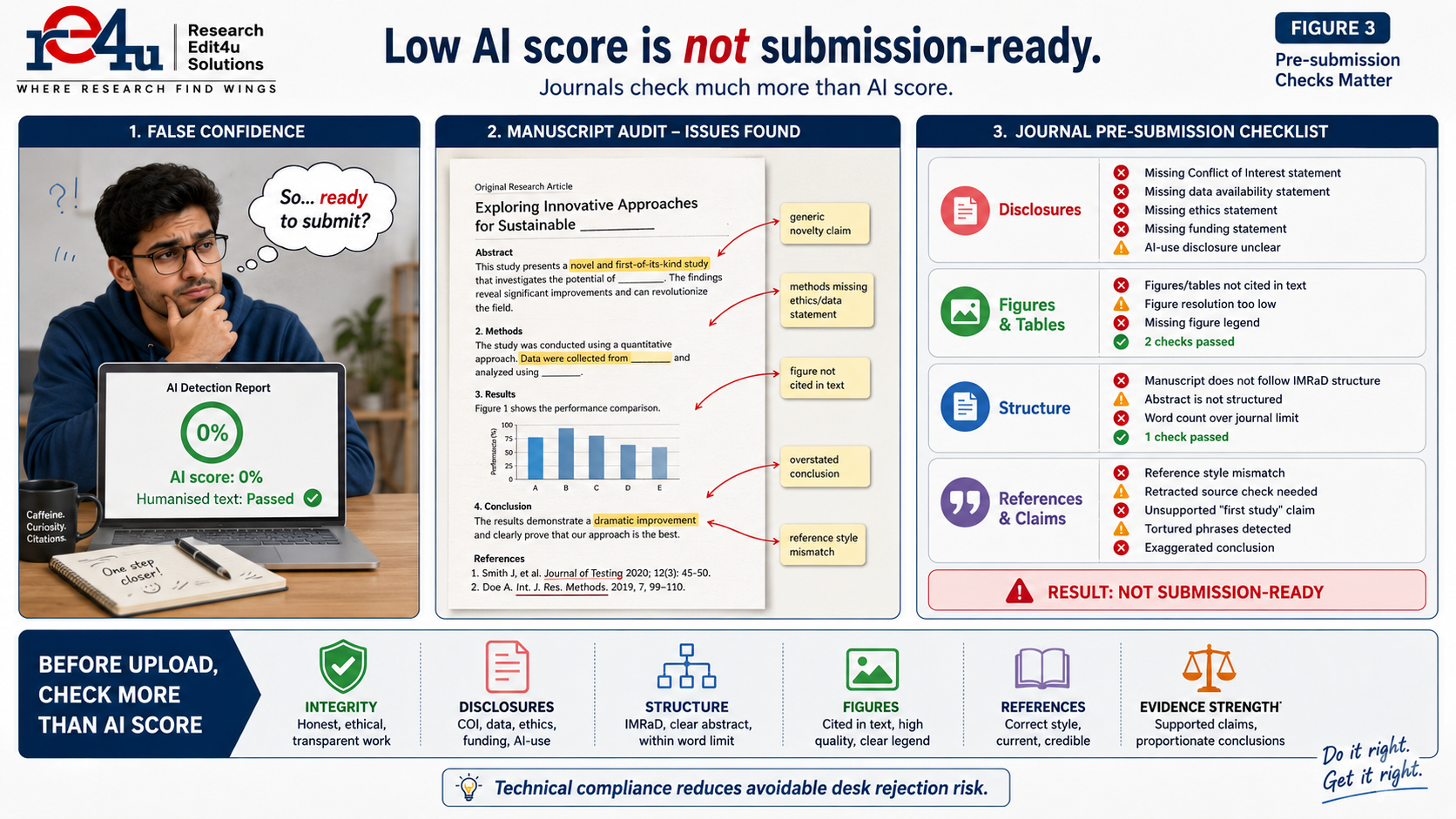
Recent submission systems are also less forgiving. Many journals now expect clearer declarations about data availability, author contributions, funding, competing interests, ethics approval, and AI use. If these are missing, the manuscript may look incomplete before your research is judged.
Fix it before submission: create a one-page journal-specific checklist. Do not use one generic checklist for every journal. Journals are like examiners: each has its own favourite way of creating stress.
4. You think AI helped you write faster. The twist: AI can create new rejection risks.
AI tools can help with language polishing and planning, but journals increasingly expect transparency. AI cannot be listed as an author. Some publishers require disclosure when generative AI tools are used. Some have restrictions on AI-generated images or figures. The issue is not simply whether you used AI; the issue is whether the use is responsible, disclosed when required, and checked by human authors.
The danger zone is obvious: fabricated references, exaggerated claims, generic introductions, AI-looking phrases, altered images, or methods that sound polished but are not reproducible. Editors do not need a robot detector to notice a manuscript that reads like it was assembled from academic wallpaper. ( Hint: Publisher’s now have AI based system to detect AI use in the manuscript not just Turnitin/ithenticate AI score , much more than that ).
Fix it before submission: verify every reference, every claim, every statistic, and every figure. If AI was used, follow the journal’s disclosure policy exactly.
5. You think the method is “inside the paper”. The twist: editors can spot method trouble from the abstract.
A desk rejection can happen when the study design looks weak even before detailed peer review. Examples include unclear sample size, missing control groups, inappropriate statistical analysis, absent validation, unregistered clinical trials, or conclusions that do not match the design.
This does not mean every study needs expensive equipment or a massive dataset. It means the method must be appropriate for the claim. If your method can only support a cautious observation, do not present it as a universal law of nature.
Fix it before submission: align your claim with your evidence. Add methodological transparency, sample-size justification where relevant, reporting standards, and limitations.
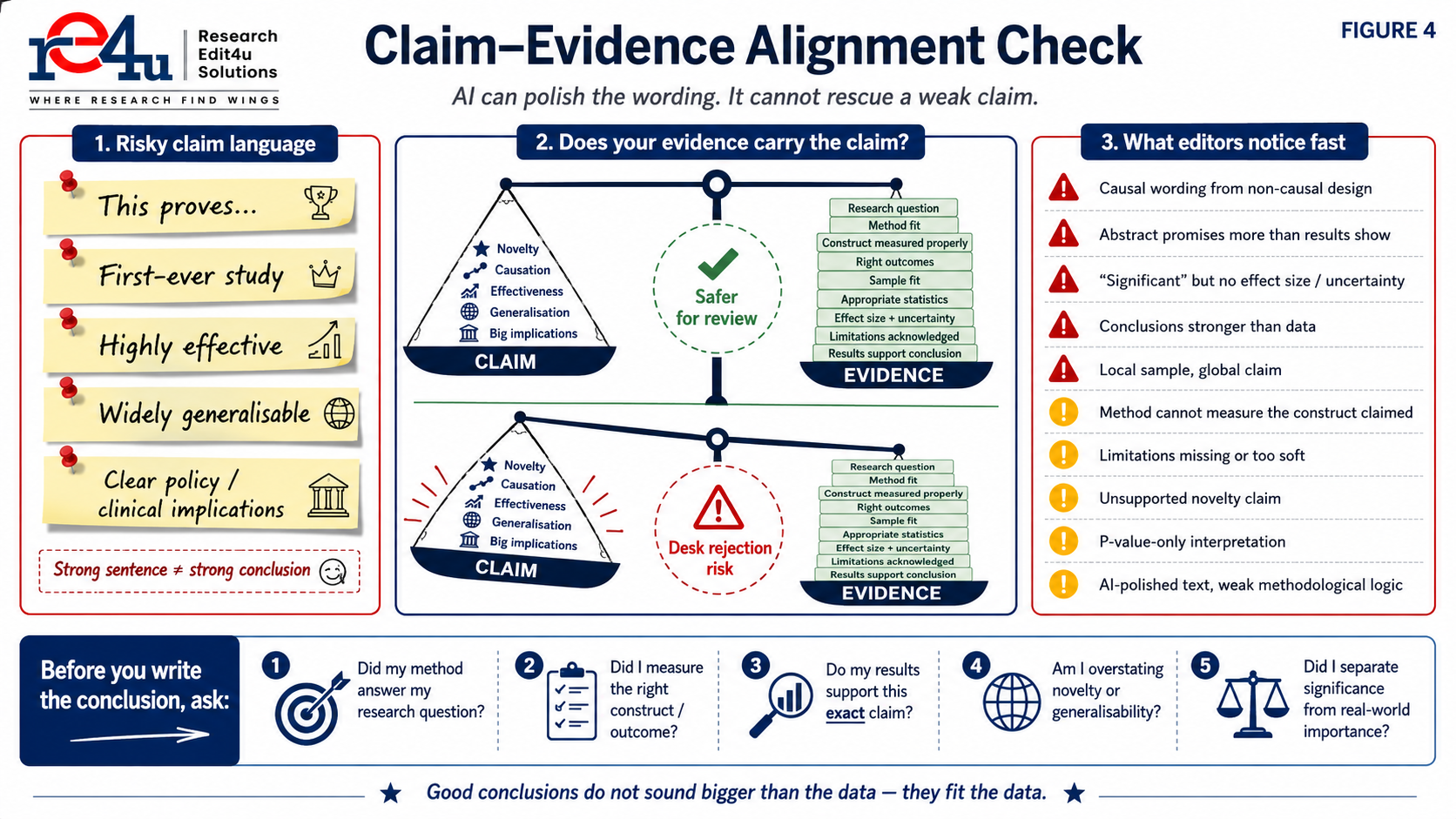
6. You think rejection is random. The twist: many desk rejections are predictable.
Yes, journals differ. Yes, editorial judgement can feel mysterious. But many desk rejections follow a pattern. The paper is outside scope. The novelty is unclear. The manuscript ignores guidelines. The abstract fails to sell the contribution. The paper lacks ethical or data statements. The conclusion overreaches. The cover letter says “highly suitable” but gives no reason why.
If five authors from your department read the paper and still cannot say why this exact journal should care, the editor may not spend time solving that puzzle.
7. What to do after a desk rejection
First, do not immediately submit the same file to another journal while angry. Angry submission is how papers go on a rejection world tour.
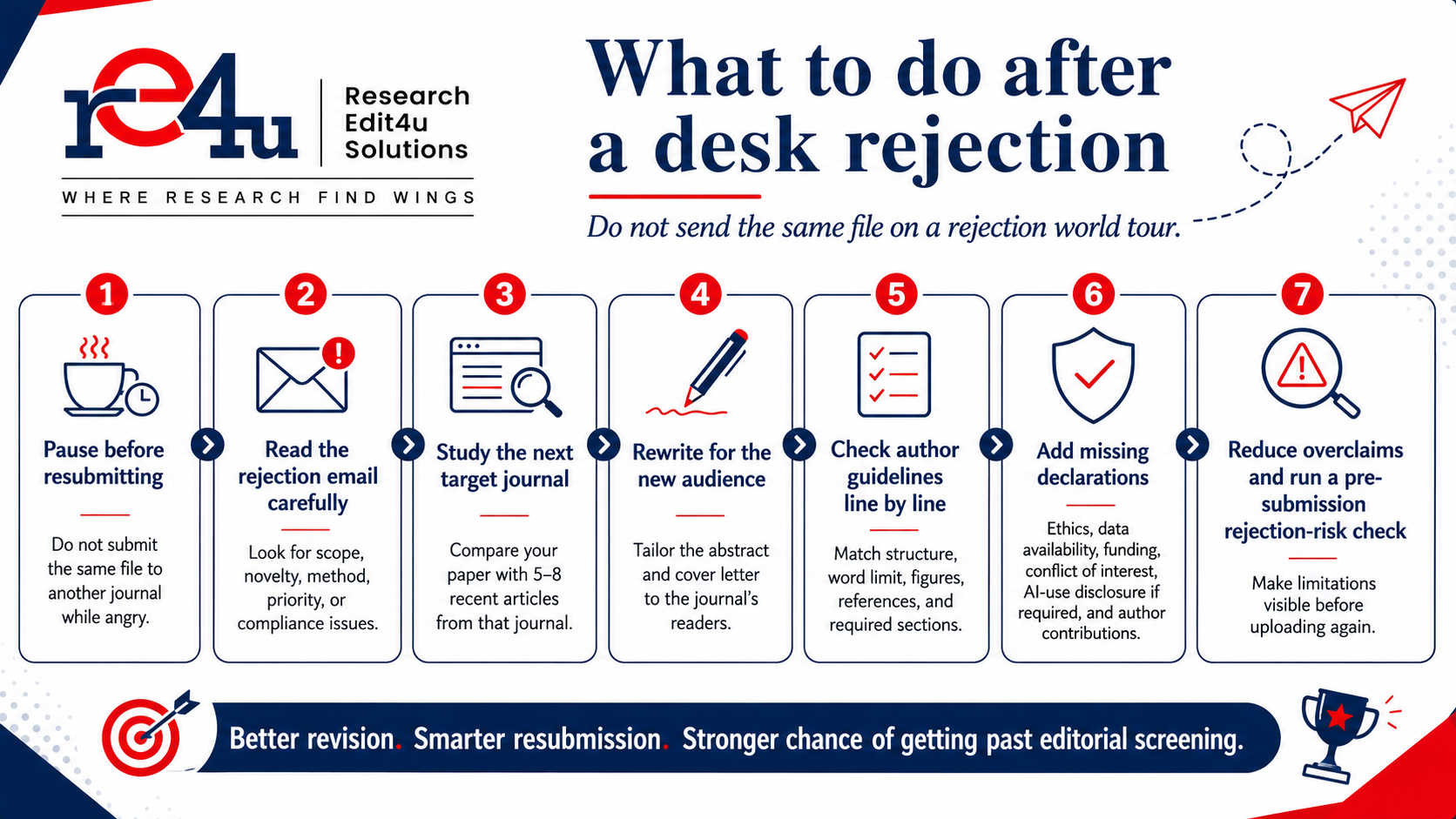
Instead, do this:
• Read the rejection email carefully. Was the reason scope, novelty, method, priority, or compliance?
• Compare the paper with 5-8 recent articles from the next target journal.
• Rewrite the abstract and cover letter for that journal’s audience.
• Check author guidelines line by line.
• Add missing declarations: ethics, data availability, funding, conflict of interest, AI-use disclosure if required, and author contributions.
• Reduce overclaims and make limitations visible.
• Run a pre-submission rejection-risk check before uploading again.
Before you submit again, do not guess your rejection risk. Download the free Researchedit4u Rejection-Risk Checklist or request a Pre-Submission Rejection-Risk Assessment.We review journal fit, abstract positioning, guideline compliance, reporting gaps, and editor-visible red flags before you press submit. |
Frequently Asked Questions (FAQ)
What is desk rejection?
Desk rejection is when a journal editor rejects a manuscript before sending it to external peer reviewers. It usually happens during the initial editorial screening stage.
Why do journals desk-reject papers?
Common reasons include poor journal fit, unclear novelty, weak abstract positioning, missing author-guideline requirements, methodological concerns, ethics or data-sharing gaps, plagiarism concerns, and overclaimed conclusions. These days, researchers have cited no particular reason for getting desk rejections. However, as per multiple opinions shared by the editors, author’s and publishers large scale submissions due to AI, non-availability of reviewer’s, and poor quality submissions are major factors behind increased rate of desk rejection.
Is desk rejection bad?
It is disappointing, but it is not always a judgement that the research is worthless. It often means the manuscript was not ready or not suitable for that particular journal.
How long does a desk rejection take?
It can take a few days to a few weeks depending on the journal, editor availability, and submission-screening process. Recent examples shared on public forum show a year’s timeline to reject.
Can I submit the same paper to another journal after desk rejection?
Yes, but revise first. Update the abstract, cover letter, journal fit argument, formatting, declarations, and claims before submitting elsewhere.
How can I avoid desk rejection?
Choose a journal based on scope and recent publications, make novelty clear, follow author guidelines exactly, add required ethical and data statements, check AI-use disclosure policies, and match conclusions to evidence.
Can editing services reduce desk rejection risk?
Editing can help when it improves clarity, structure, guideline compliance, journal-fit positioning, abstract strength, and claim-evidence balance. Editing alone cannot fix a fundamentally weak method or wrong journal choice.
Does AI use cause desk rejection?
AI use itself may not cause rejection, but undisclosed or irresponsible AI use can create problems. Fabricated references, generic writing, altered images, and missing AI disclosure can increase rejection risk.
Know how ResearchEdit4u Solutions can help
· Plagiarism Check and Reduction
· Response to Reviewer Support
Important links for readings
COPE position on authorship and AI tools
Springer Nature editorial policies on AI
Springer Nature data availability statement guidance